- Role
- Concept and character design
- Built with
- Google Flow, Nano Banana
- Method
- Reference conditioning
- Output
- Five frames, still and motion
Characters drift, and the fine detail goes first
A model doesn’t remember a character between images. Every render is a fresh guess, so a face comes back close but not the same. What shifts first is never the obvious thing. Bone structure holds. Hair color holds. It’s the small precise detail that slides: a pattern, a jawline, the spacing of a mark.
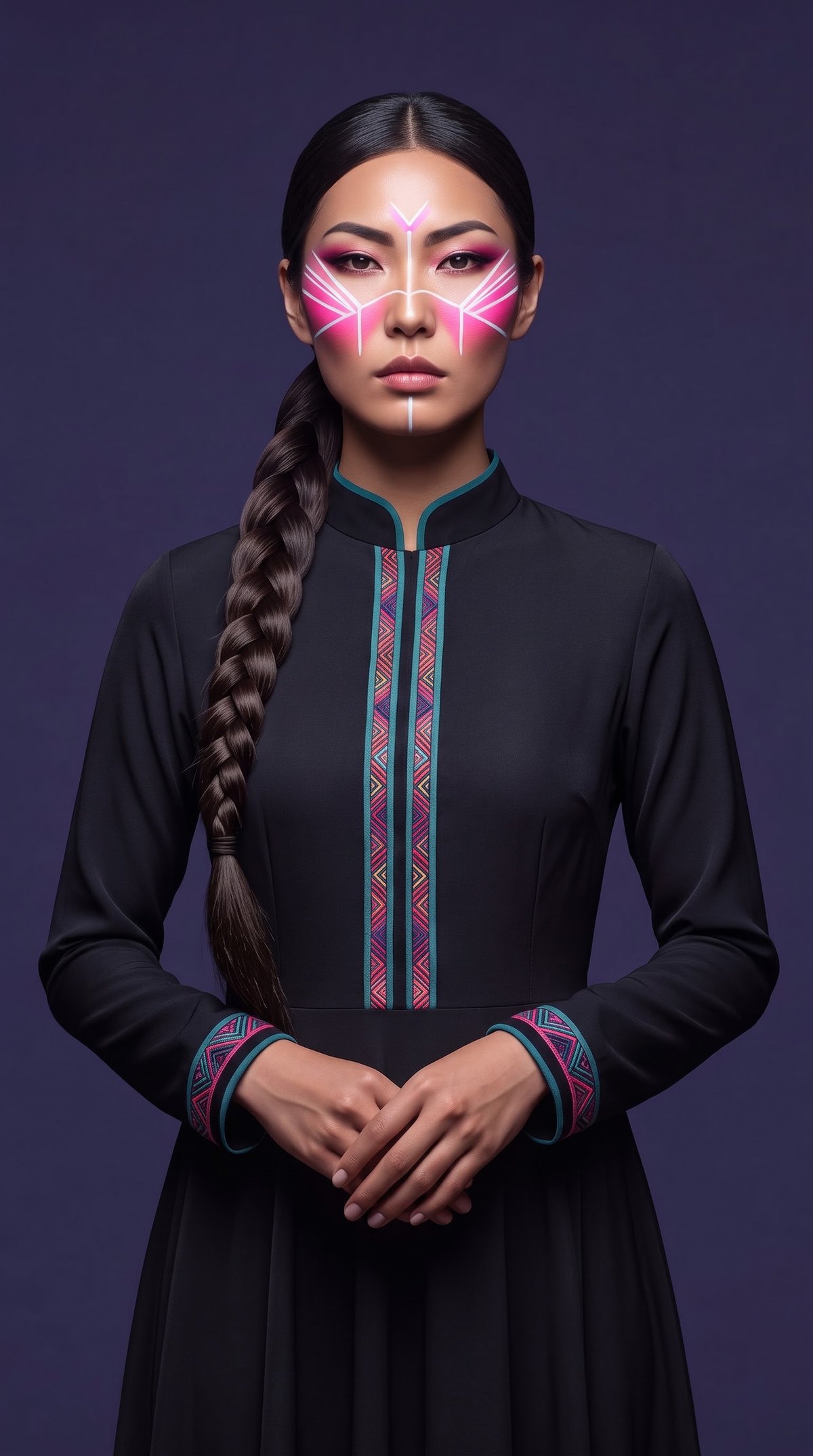
So I gave her a painted geometric pattern across the eyes and brow. It isn’t decoration. Fine geometry sitting on a face is the hardest thing in a frame to reproduce, so if the shape of it survives, everything easier survived with it.
Where she came from
Sova started as a graphic. Flat color, heavy geometry, a headdress, nothing photographic anywhere in it. There was no face to hold on to, only a look.

Words carry style. Only a picture carries identity.
No amount of describing her gets her twice. “Magenta chevrons across the brow” gives you a different face every time, and all of them look fine.
So one photoreal frame gets approved and becomes the spec. It’s attached to every generation after it, and the prompt only has to say what changes: the angle, the expression. Anything I don’t name as changing, I name as staying.
The sheet
Same dress, same paint, same braid. Only the angle and the expression change. Every frame is conditioned on the approved reference, never on the image before it, so errors can’t compound down the line.
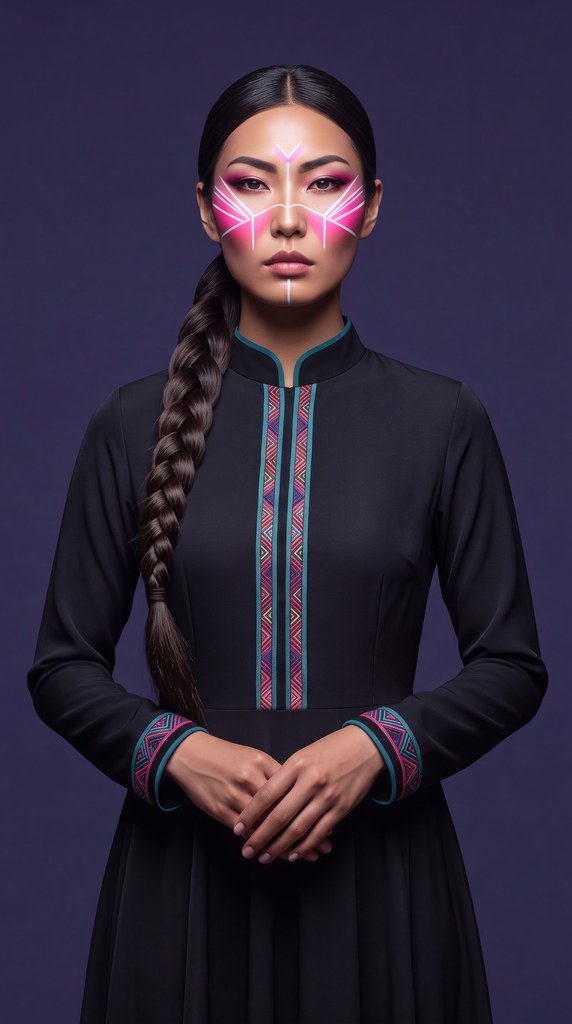
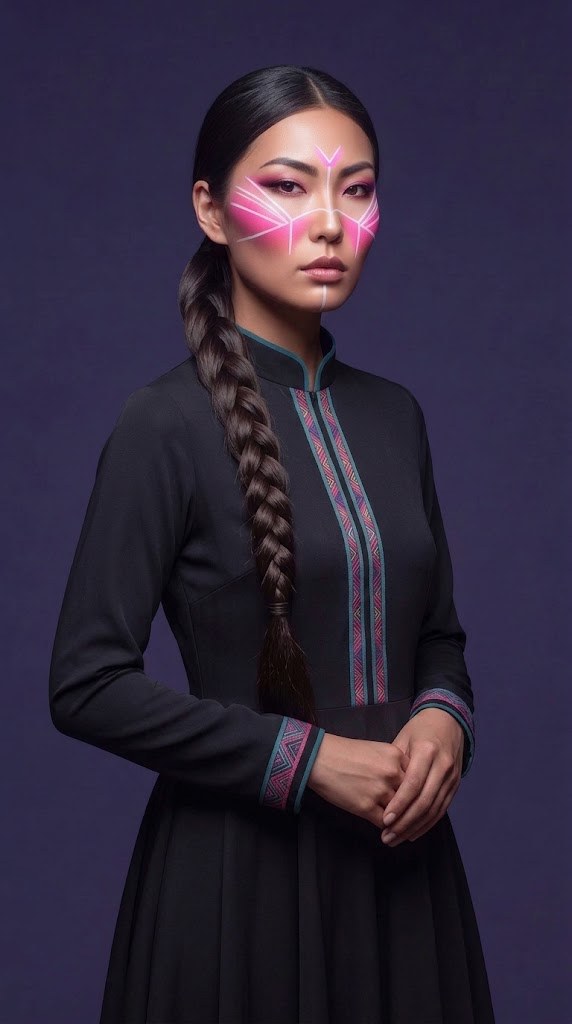
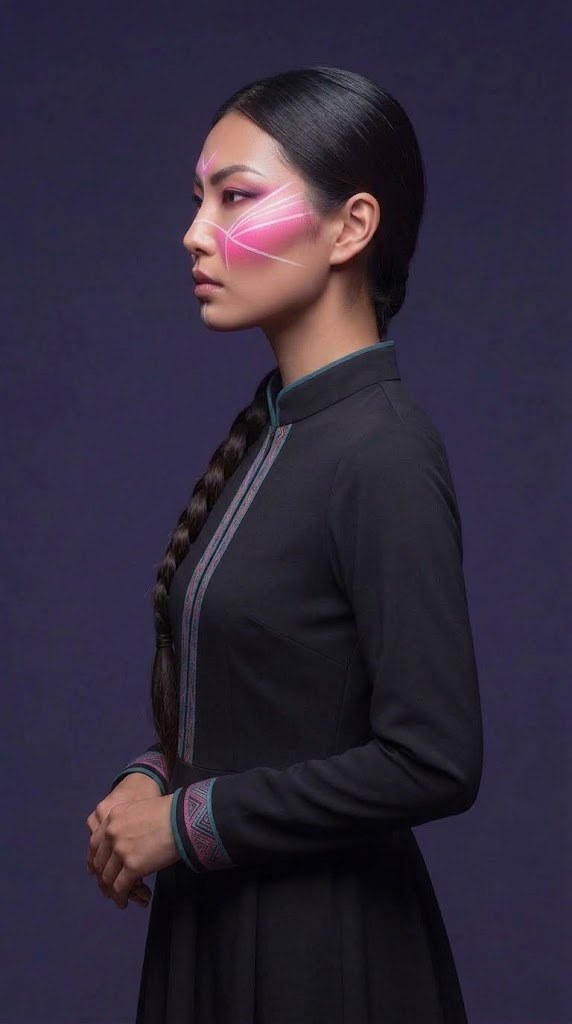
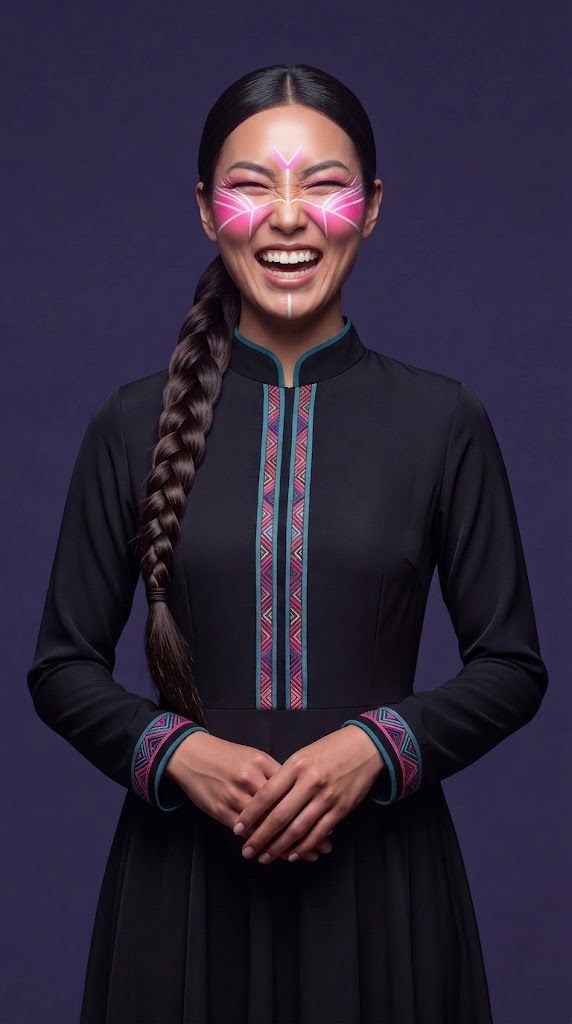
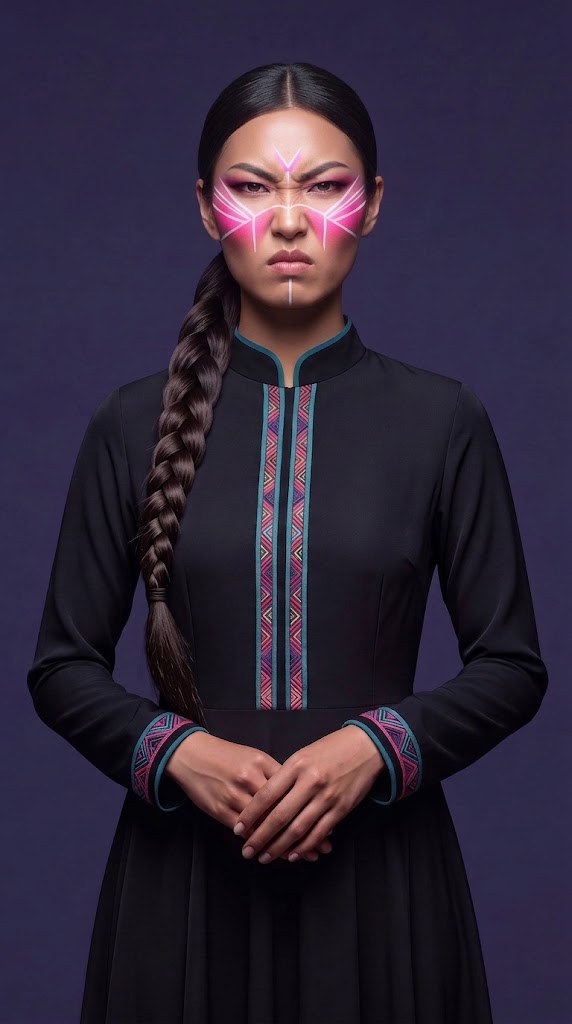
The laughing frame is the one that matters. A costume change leaves the face alone, but a laugh lifts the cheeks the paint sits on. It moves with her rather than floating on top, which is what separates a held character from a sticker.
What held, and what I’d watch
The bone structure, the features and the shape of the paint carried through three angles and two expressions, and from still into motion.
Being straight about the rest: the paint’s color shifts depending on what she’s in. The shape holds, the palette moves. I’d call that correct rather than broken, because paint is styling and it should be free to change the way a costume does. What has to hold is the face underneath. But it’s a decision to make at the brief, not something to find at delivery, which is why the reference gets approved before anything else is built.
The rule I work by
Lock identity to a picture, not to words. Change one thing at a time. Say what has to stay the same in every prompt, because anything you don’t name is fair game. And approve the reference before you build the set. Fixing a character halfway through means starting over.