Shot correction · in progress
Digital Rain
A cyborg geisha walks through blue digital rain and a crowd parts around her. The crowd came back wrong. This is what was wrong with it, and why the shot was corrected rather than generated again.
- Role
- Direction, correction, edit
- Stage
- Image to video, then finishing
- Method
- Face replacement and assembly in Runway
- Status
- In progress, fourteen seconds cut
What was wrong
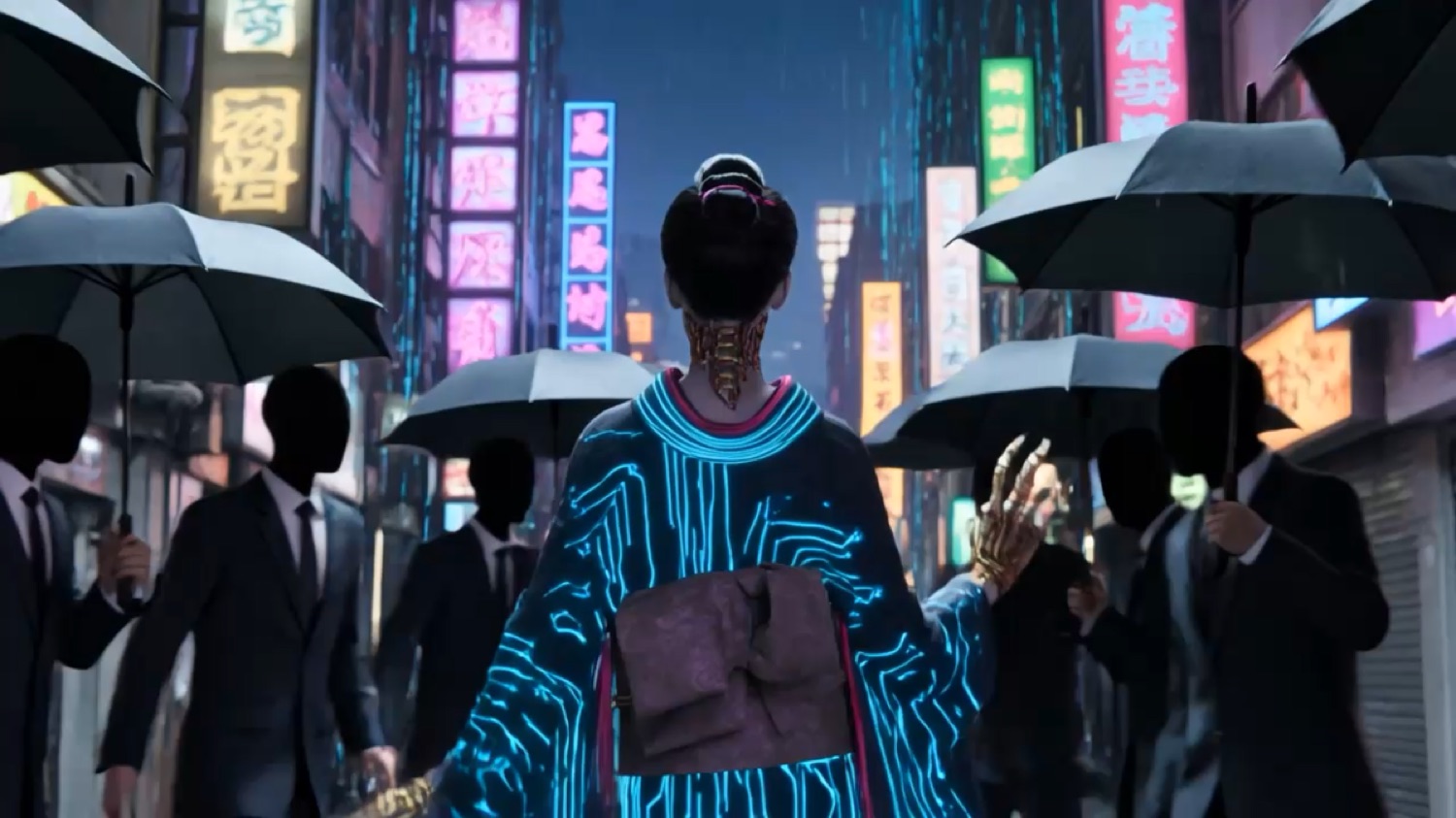
The shot asks for a crowd under umbrellas that parts as she walks through it. The crowd arrived, and most of it rendered correctly. Suits, posture, umbrellas, the wet neon street. What failed was the faces: featureless black voids where heads should be, on bodies that were otherwise fine.
That breaks the only thing the shot is doing. Parting is a reaction, and a reaction needs somebody to react. A faceless crowd cannot defer to her, so the gesture at the centre of the shot had nothing to play against. The frame looked atmospheric and meant nothing.
The decision
The obvious move is to regenerate the shot. It is also the wrong one. The walk, the rain and the character were all correct, and re-rolling gambles every one of them to fix the part that was not. Generated takes are not reproducible. You do not get the same shot back with one element improved, you get a different shot.
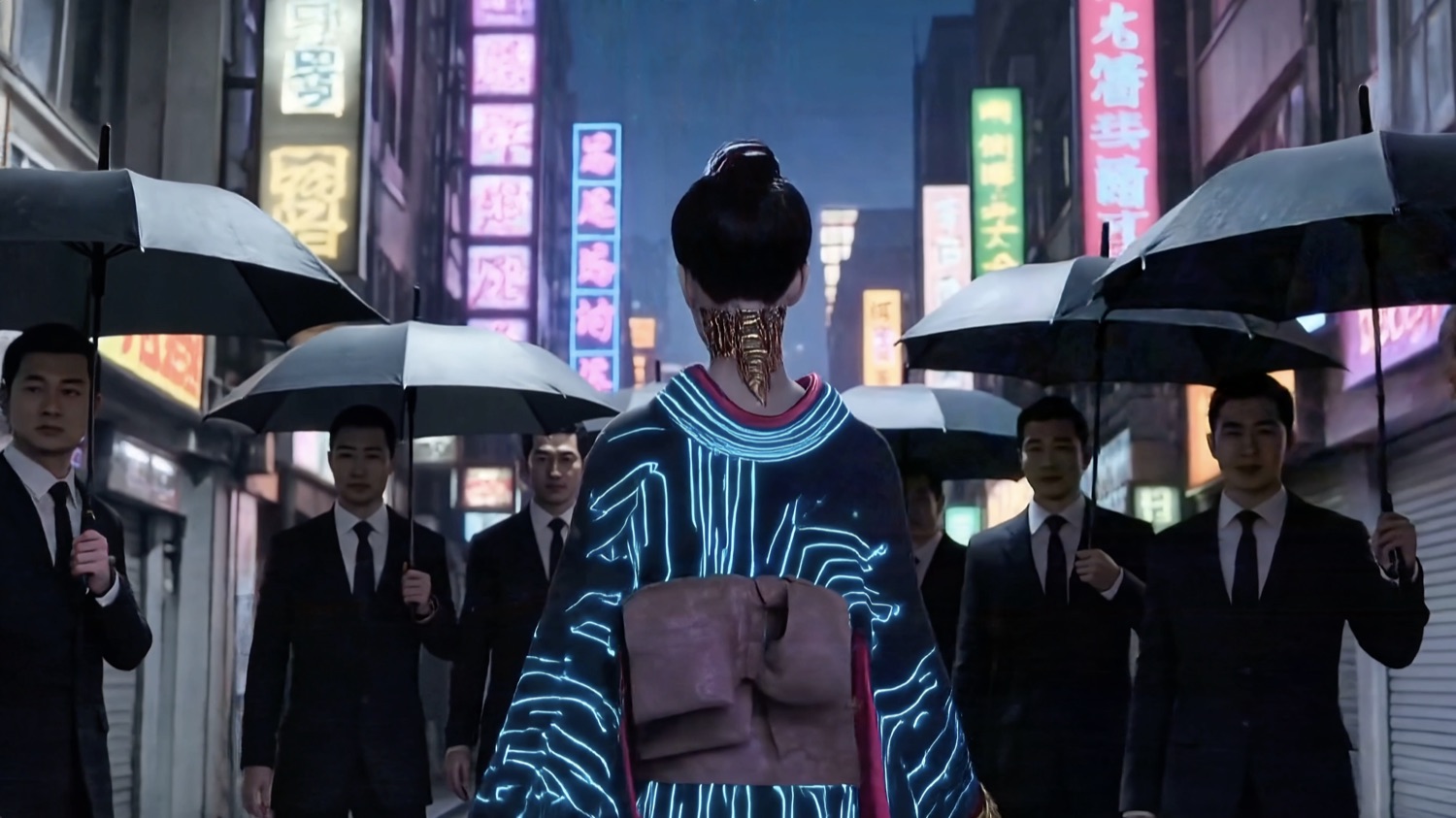
So the correction ran on the footage that already existed. The faces were swapped in Runway, leaving the suits, the umbrellas, the walk and the street untouched, and the sequence was then stitched together in Runway as well. The original clip was kept throughout. Nothing was re-rolled from a prompt.
This is the whole argument for treating generated footage as footage. Once a shot exists, it gets the same treatment any other shot gets: fix the element, protect the take.
What the comparison shows
The two frames are the same shot. Same camera position, same walk, same umbrellas, same neon. Only the crowd changed, and it changed in place. That is the whole point of correcting rather than regenerating: a re-rolled take would have given a different street, a different walk and a different character, and the comparison above would not exist because there would be nothing to compare.
Faces are also the specific thing worth insisting on here. The crowd exists to defer to her, and deference is something a face does. Once they can look at her, the walk means what it was written to mean.
The accident worth keeping
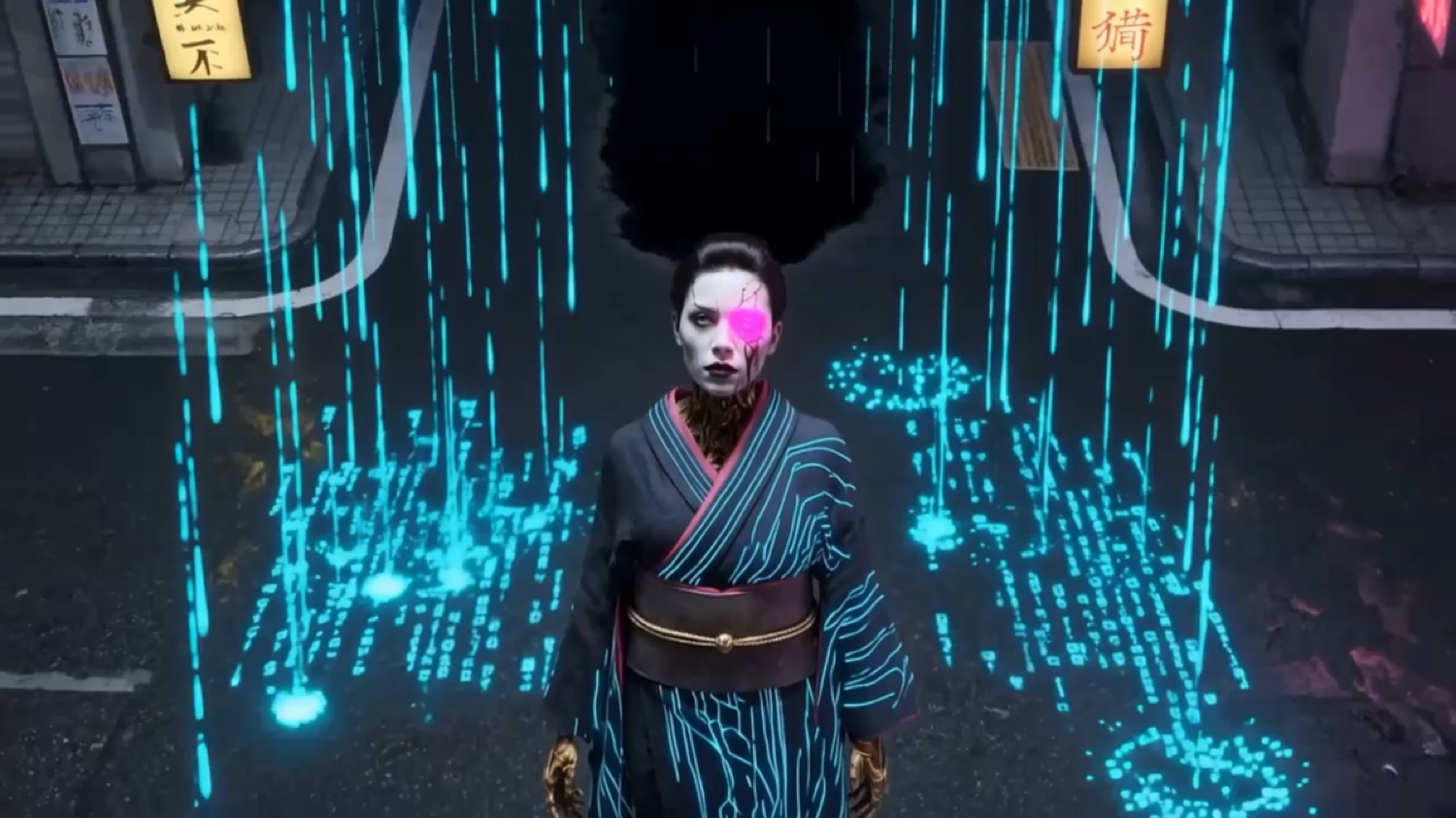
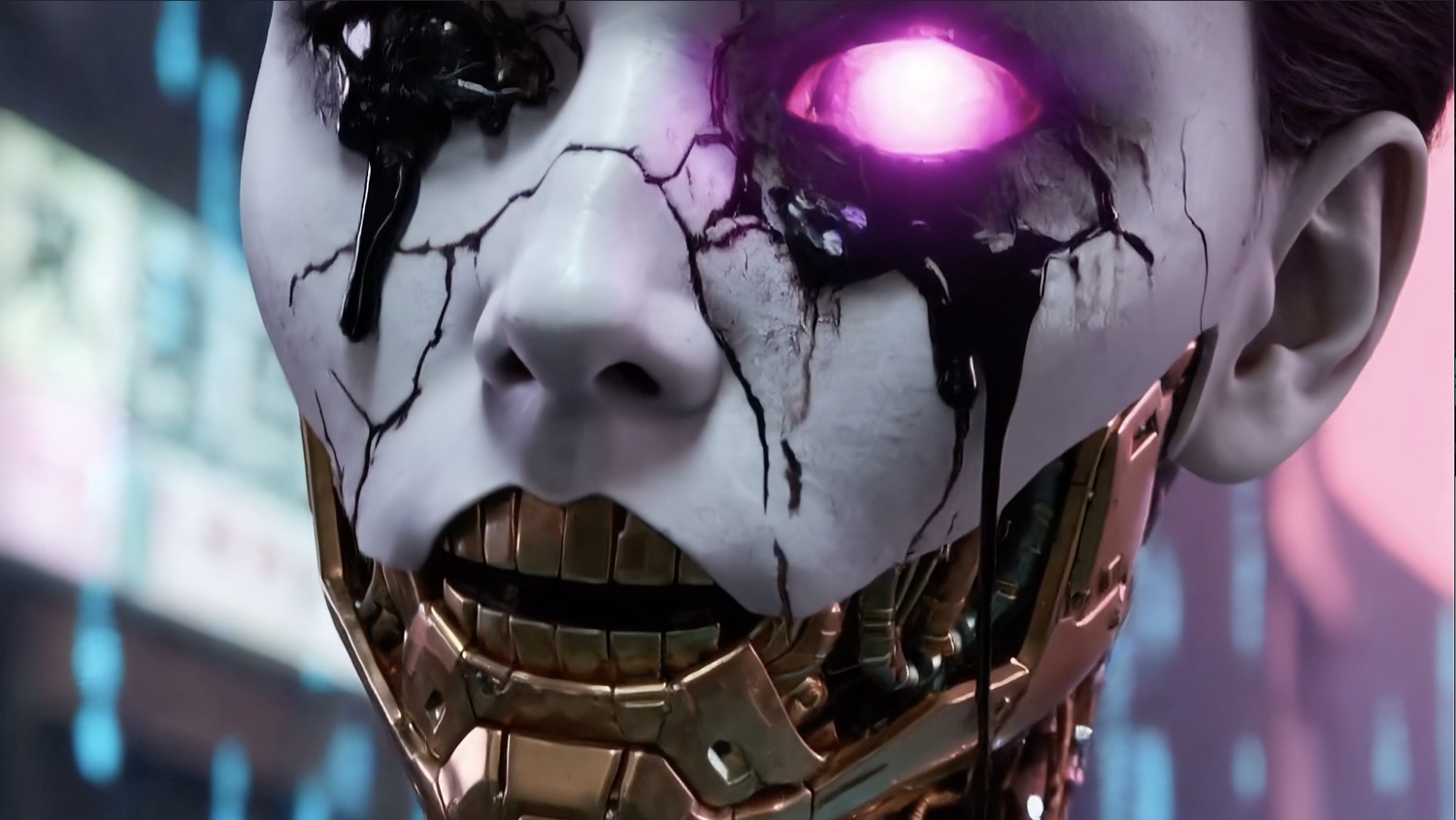
An earlier pass returned something nobody asked for. The porcelain face had broken away at the jaw, exposing a full gold mechanical mandible underneath, with the optic burning through the cracked socket above it.
It was not the note, so it did not go in the shot. It is also a better idea than the one that was asked for, because it answers a question the design had not settled: what is actually under the face. So it is kept and filed for a later beat rather than discarded as a miss.
Worth saying plainly, because the opposite habit is more common. A pipeline tight enough to reject a wrong result should still be loose enough to notice a good one.
Where this sits
This is stages three and four of the working pipeline: approved material moved into video, then faults isolated and fixed in finishing instead of being thrown back to generation. The piece it belongs to is still being cut, and the story is not locked yet, which is why fourteen seconds is what exists rather than a finished short.