- Role
- Concept, art direction, imaging, QA
- Deliverable
- KV-WHC-01, hero asset at 3375², sRGB
- Built with
- Nano Banana, Adobe Photoshop, Topaz
- Year
- 2026
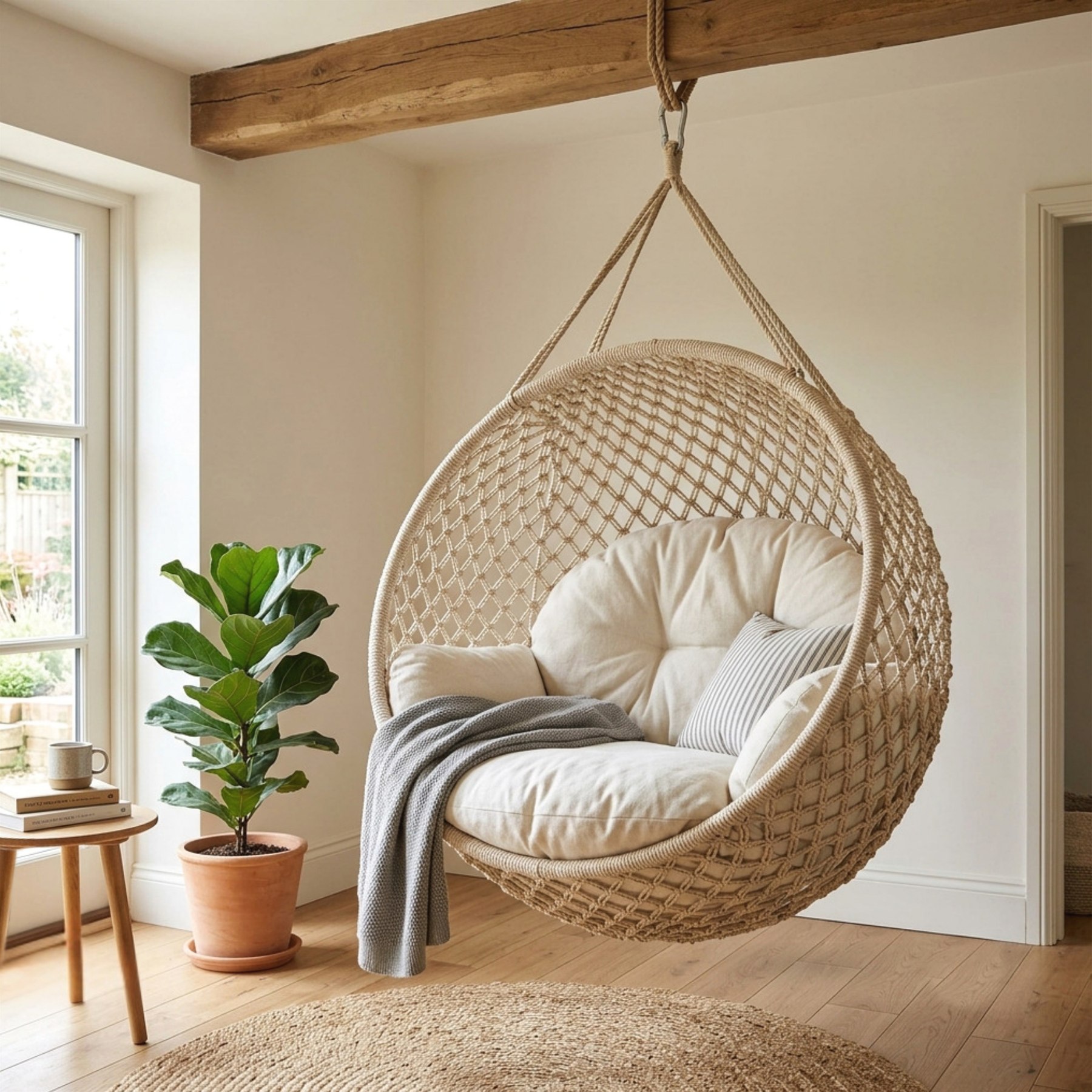
A product chosen because it breaks things
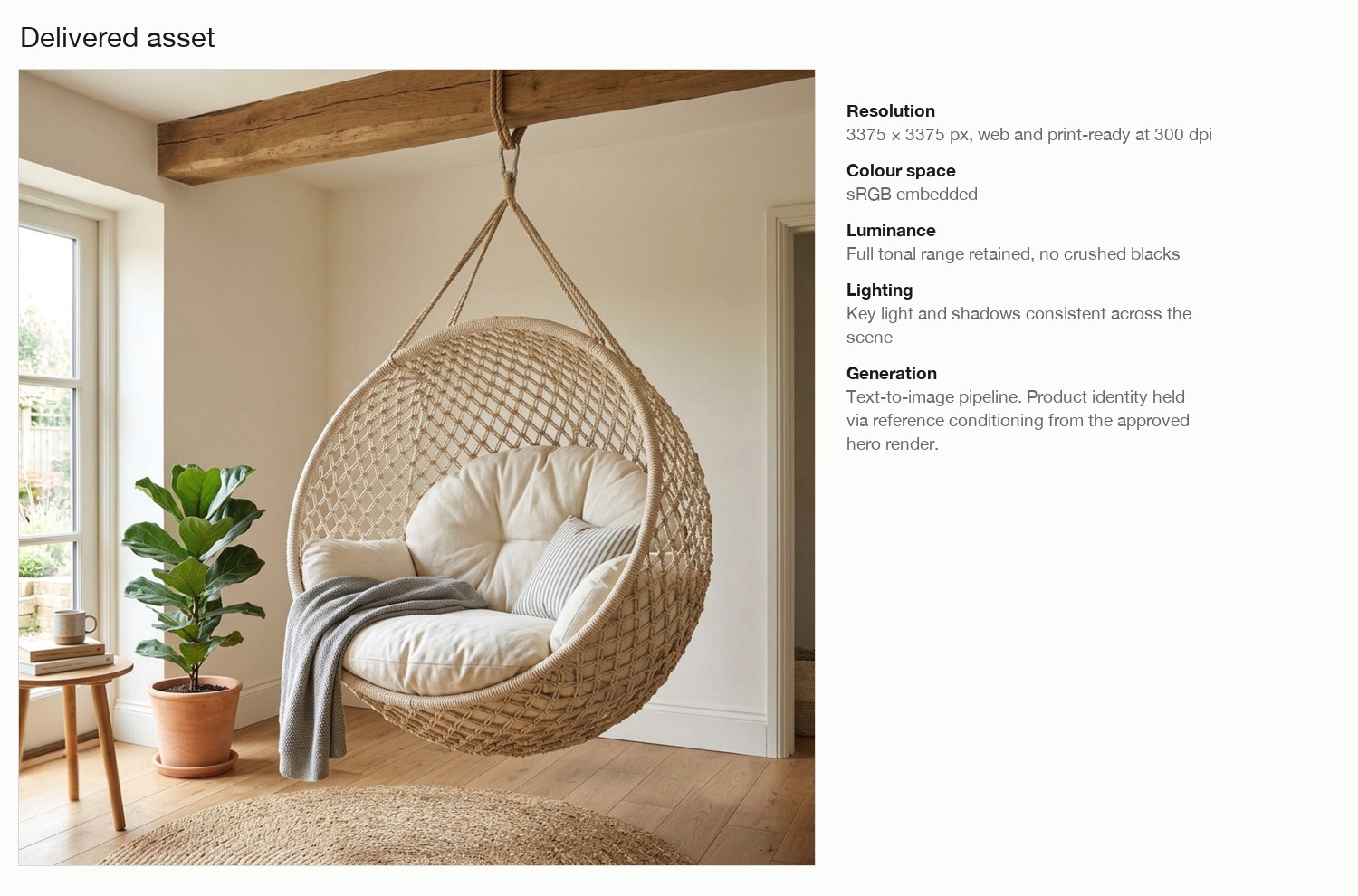
KOVA is an invented furnishings brand, built so the imaging problem would be real rather than flattering. The hero product is a suspended woven hanging chair, and it was picked for two specific reasons.
Open repeating weave is where generative structure fails first. Fine repeating texture is the thing a model loses before it loses anything else. And a suspended object forces explicit contact shading, because nothing else in the frame grounds it.
Both predicted failures happened. Both were caught in QA. That was the point.
The QA pass
Three defects found before delivery, logged as issue, action and result, which is the form that survives being handed to someone else.
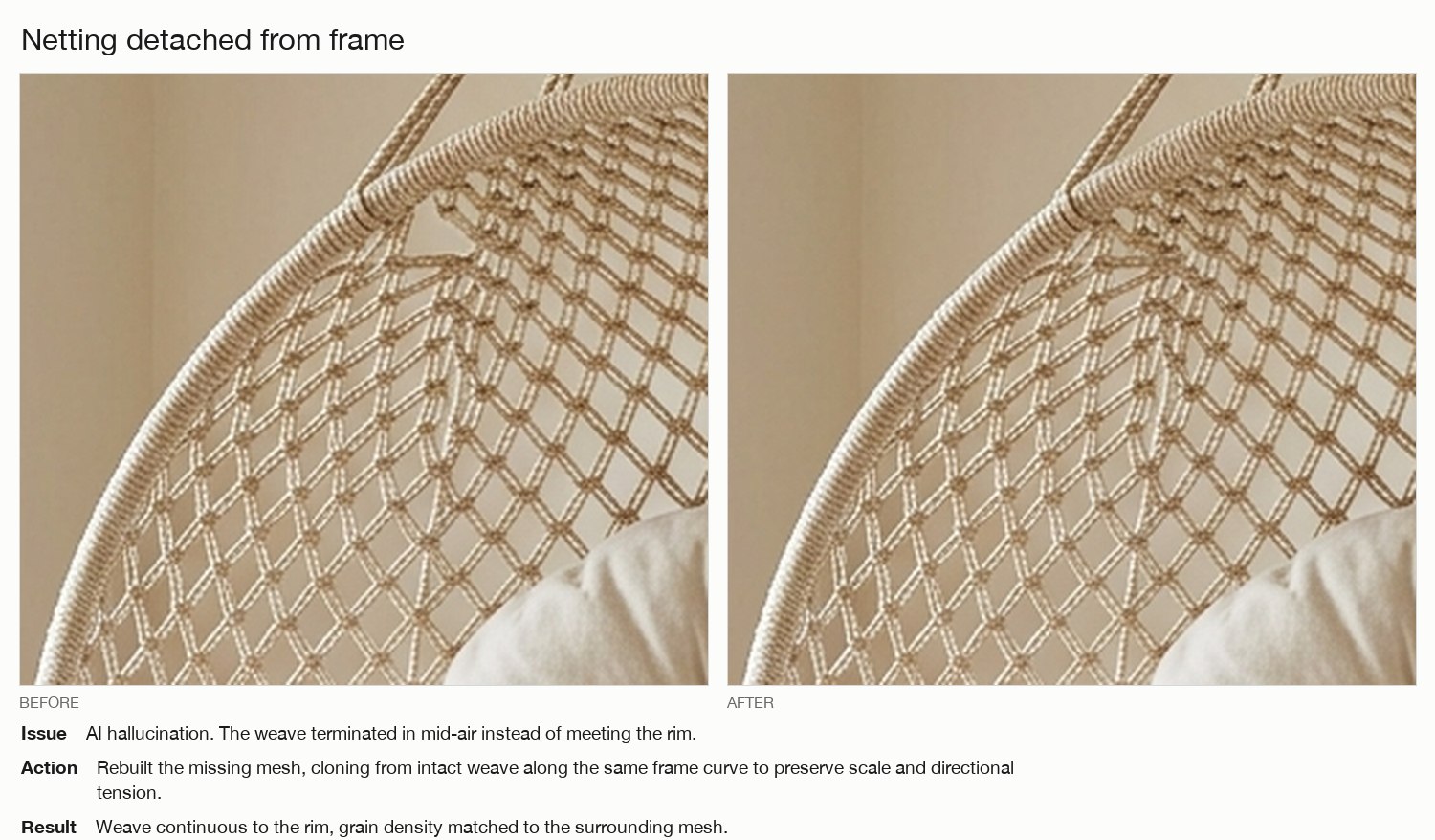
- Issue
- The weave terminated in mid-air instead of meeting the rim.
- Action
- Rebuilt the missing mesh, cloning from intact weave along the same frame curve so scale and direction carried through.
- Result
- Weave continuous to the rim, grain density matched to the surrounding mesh.
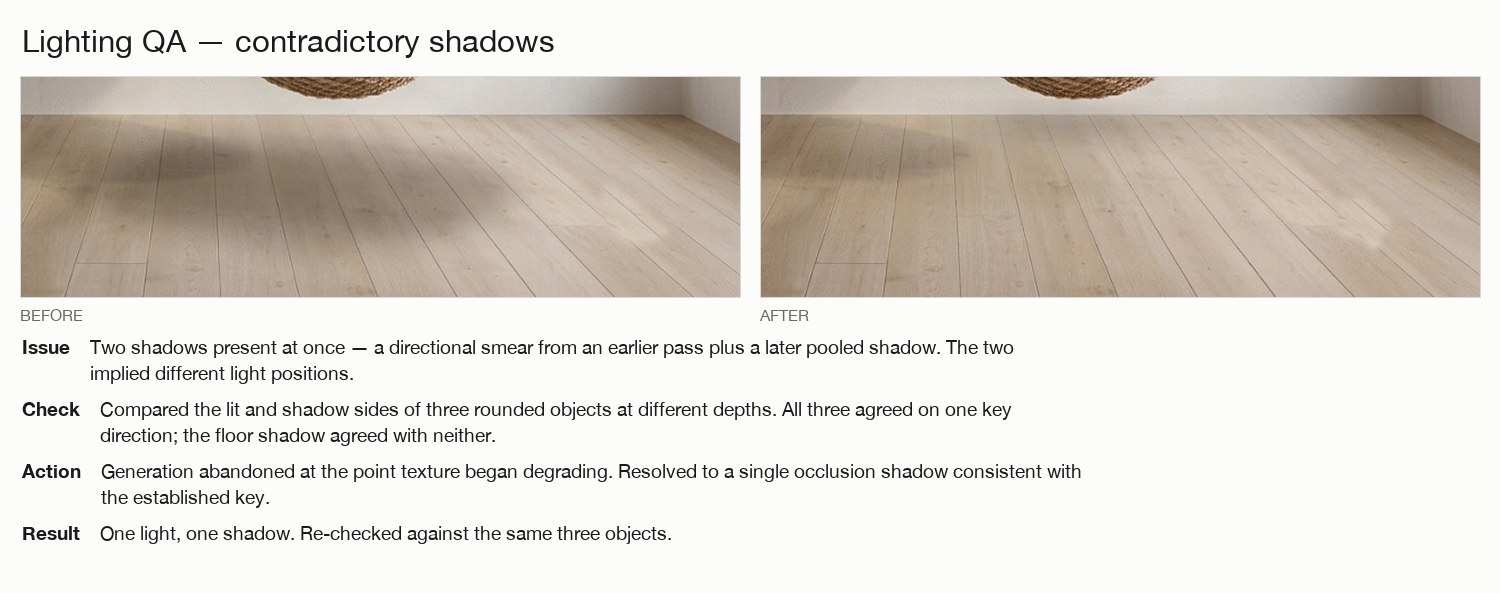
- Issue
- The hanging chair cast no contact shadow, so it read as pasted onto the room rather than placed in it.
- Action
- Added a contact shadow matched to the angle and softness of the window key, blended so the floorboard and rug texture read through.
- Result
- The chair sits grounded in the space.
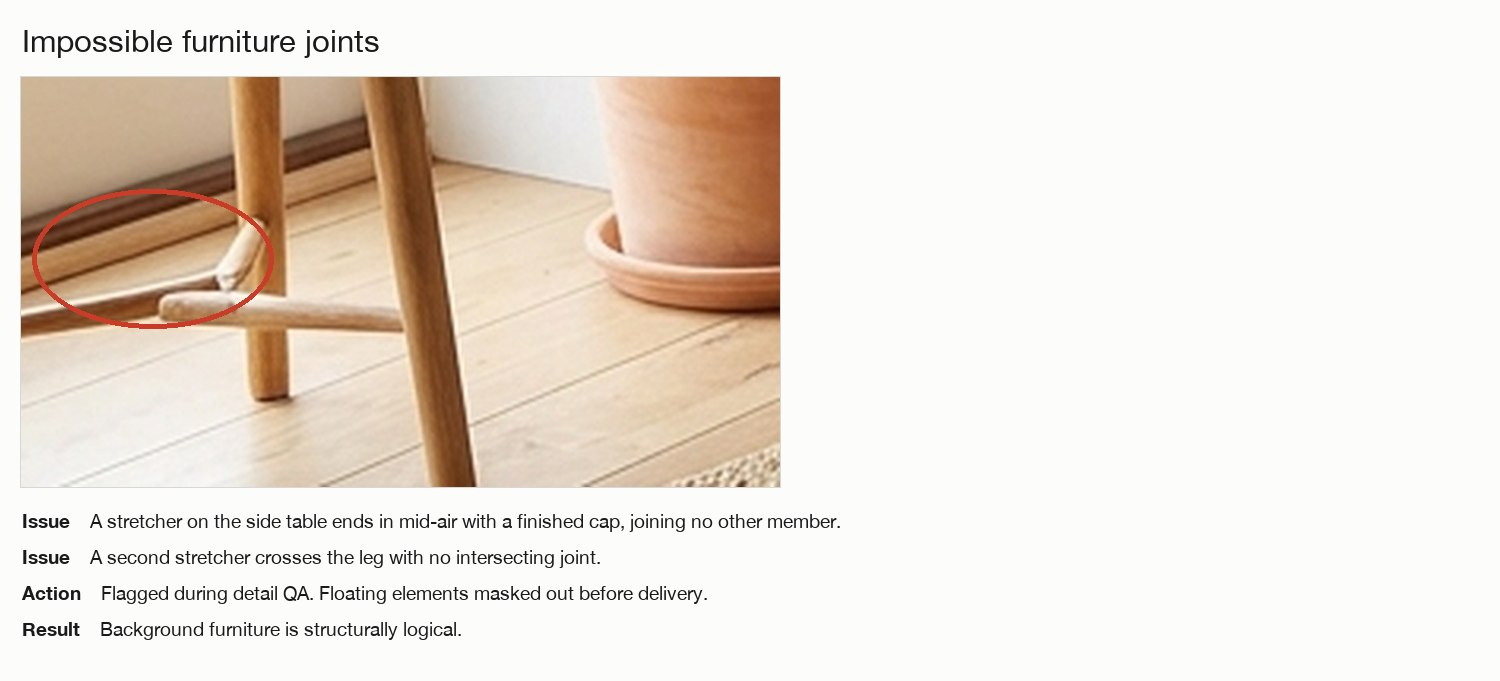
- Issue
- On the side table a stretcher ended in mid-air with a finished cap. A second crossed a leg with no joint.
- Action
- Flagged during detail QA. Floating elements masked out before delivery.
- Result
- Background furniture is structurally logical.
Four rules this job produced
Regenerate for global changes, retouch for local ones. Regeneration re-renders the whole frame, so using it to fix one object puts product identity at risk.
Don’t stack generative passes. Texture degrades cumulatively. Past three or four, stop and retouch.
Defects on a structural edge beat automated repair. Something crossing a baseboard-to-floor line carries that line at a different height in every source area. Those need hands on the canvas.
Upscale last. Never mid-pipeline. It bakes in artifacts and makes the pixel work harder.
Why the package matters more than the picture
One person making one good image needs no process. A team making four hundred images across a catalog needs one, because the failure is not a bad image. It is inconsistency: the same sofa slightly different in every room, a finish drifting warm between shots, a product photographed at the wrong scale that generates returns.
So the asset ships with the system that made it. A seven-stage pipeline with approval gates and named owners. A prompt system assembled from blocks rather than free-written, so three people produce work that looks like one person made it. A tool matrix recording what failed as well as what worked, including the one I tested and rejected. And a settings record for every keeper, so any image can be rebuilt a year later by somebody else.
That last point is the real deliverable. An image nobody can reproduce is a liability.